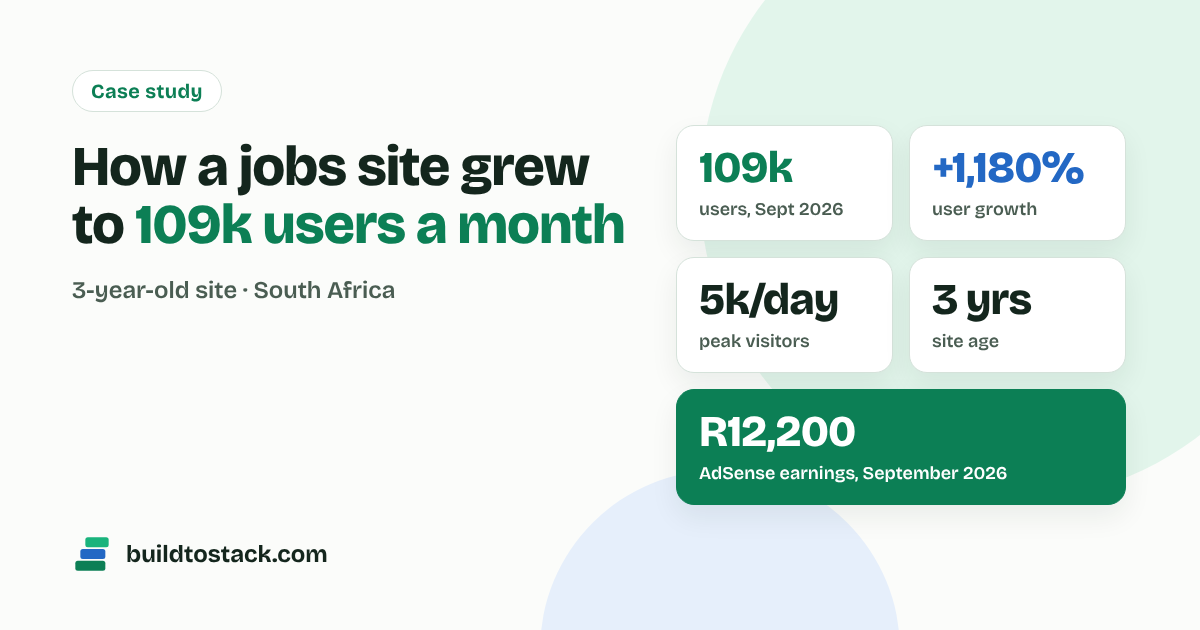
This case study looks at one of our own websites: a South African jobs site that helps students and graduates find internships, bursaries, learnerships and entry-level jobs. We’re keeping the name private to protect the niche, but every number below comes straight from its Google Analytics, Site Kit and AdSense dashboards.
The site is three years old. In September 2026, its best month so far, it had 109,000 active users, up 1,180% on the period before, with up to 5,000 visitors a day. AdSense earnings for the month reached R12,200, more than five times the same month a year earlier.
Getting there wasn’t easy. The site competes with some of the biggest job portals in the country. Below we break down what the site is, how it won traffic against much larger competitors, how it makes money, and how you can build something similar.
The site at a glance
The site is a free directory of opportunities for young South Africans. Every day, students and graduates search Google for things like “internships in Johannesburg”, “bursaries for engineering” or “learnerships 2027”. The site answers those searches with clear, up-to-date listings.
Each listing covers one opportunity: a graduate programme, a bursary, a learnership, an internship or an entry-level job. It explains who it’s for, what it offers, the requirements, how to apply and when it closes. There are now hundreds of listings, with new ones added every week.
| Niche | Jobs, internships and bursaries (South Africa) |
| Site age | 3 years |
| Platform | WordPress with a custom theme |
| Traffic | 109k users in September 2026, up to 5k a day |
| Income | R12,200 from AdSense in September 2026 |
The results
Google Analytics, September 2026: 109k active users (up 1,180%), 108k new users, 189k sessions and 824k events.
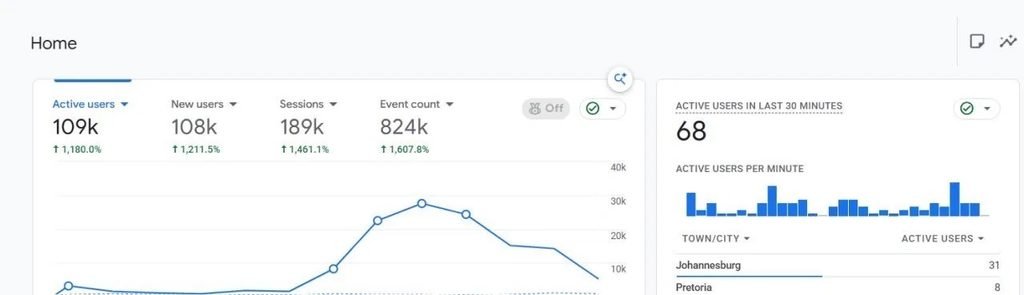
The Google Analytics numbers show two things. First, the site reached over 100,000 people in a single month. Second, almost all of them were new users: 108k of the 109k. That’s typical for a search-driven site, where each listing attracts people looking for that specific opportunity.
Site Kit: 141k visitors over 90 days, up 455% on the previous 90 days.
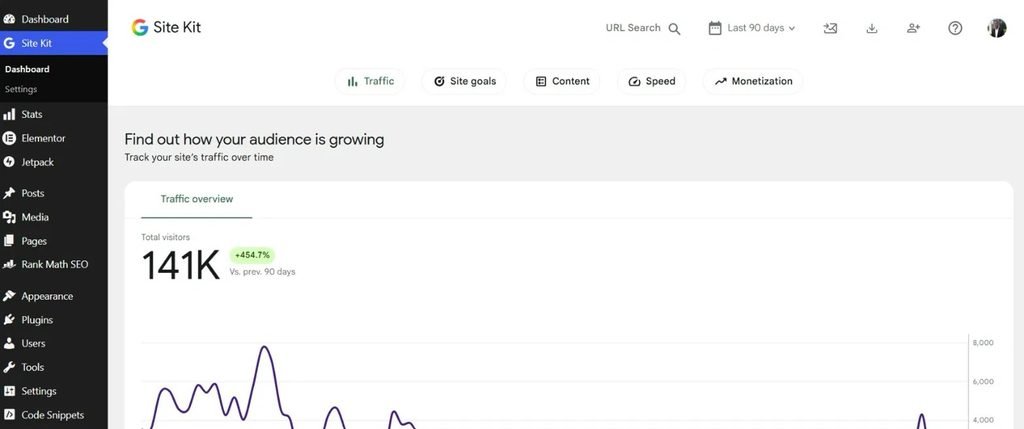
The 90-day view shows the shape of the growth. Traffic doesn’t climb in a straight line. It rises sharply when big application windows open, dips in quieter weeks, then rises again. September was the peak: on the busiest days the site saw around 5,000 visitors a day.
AdSense estimated earnings, September 2026: R12.2k for the month, up more than 500% on the same period last year, and R7.28k in a single week.
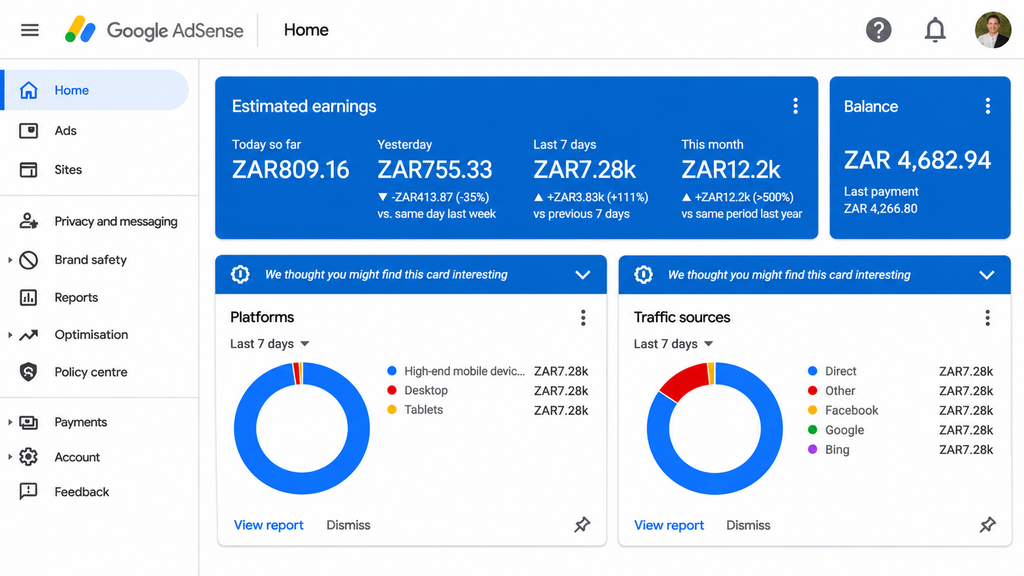
The earnings follow the traffic. In the week shown, the site earned R7,280, more than double the week before. On a strong day it earns R700 to R800.
The challenge: competing with the big sites
For a long time, traffic was hard to come by. Job and bursary searches in South Africa are dominated by large, established portals with thousands of pages, big teams and years of authority in Google. A small site can’t beat them by doing the same thing.
So instead of trying to out-muscle them, we looked for the gaps they leave. Big portals cover everything broadly. Our listings go deep on one opportunity at a time, go live quickly when applications open, and make the closing date impossible to miss. That shift is what turned a slow site into one getting thousands of visitors a day.
How we beat bigger competitors
1. One page per opportunity
Every opportunity gets its own page, targeting the exact phrase people search for, such as “[Company] Graduate Programme 2027”. Large portals often bury these inside general job feeds. A dedicated page that answers that one search can outrank them.
2. Speed when applications open
Most searches for a programme happen in the days after it opens. Publishing a clear listing quickly, before the big sites catch up, means the site is often one of the first useful results when demand peaks.
3. A consistent listing structure
Every listing follows the same layout, which helps both readers and Google:
- A clear title with the company, programme type and year.
- A short summary in the first paragraph: what it is and who it’s for.
- Key details in a quick-scan format: location, field, duration, stipend or value, closing date.
- Requirements as a list.
- How to apply, step by step, with the official link.
- Related opportunities linked at the bottom.
4. Closing dates front and centre
Each listing shows a status label such as “Open”, “Closes tomorrow” or “12 days left”, on the listing and on the homepage. Visitors see at a glance what’s still worth applying for. That’s something many larger sites don’t do well, and it keeps people browsing.
5. On-page SEO on every listing
Rank Math handles the technical basics: an SEO title, a meta description, a clean URL and the XML sitemap. Each listing links to related ones, which helps Google find new pages quickly and keeps visitors moving through the site.
6. A WhatsApp channel
A WhatsApp button in the header lets visitors follow new opportunities directly. This gives the site a second traffic source that doesn’t depend on Google rankings, and brings people back every time new listings go up.
The technical setup
We kept the setup simple and fast, because most visitors are students browsing on phones with limited data.
| Part | What we use | Why |
|---|---|---|
| Platform | WordPress | Free, flexible, easy to publish quickly |
| Theme | Custom theme built with AI | Fast, no page builder, designed for listings |
| SEO | Rank Math | Titles, descriptions, sitemap |
| Speed | LiteSpeed Cache | Serves cached pages quickly |
| Analytics | Google Site Kit and GA4 | Traffic data inside WordPress |
| Security | Wordfence | Firewall and malware scanning |
| Backups | Backuply | Regular backups before big changes |
The custom theme made a real difference. Instead of a heavy multipurpose theme, it has only what a listings site needs: a clean homepage showing the latest opportunities, category pages, a fast listing template and status labels for closing dates. Read how to build a WordPress theme with AI to make your own.
How the site makes money
The site earns from Google AdSense, using auto ads. With auto ads, Google decides where and how many ads to show on each page, based on the layout and what tends to perform. That keeps the setup simple: there’s no need to place ad codes by hand on hundreds of listings.
We added AdSense only once traffic was steady. Applying with a handful of pages and almost no visitors usually leads to rejection or very small earnings.
Protecting the AdSense account matters as much as earning. Google watches for invalid clicks, such as one person clicking ads over and over, and can limit or close accounts that receive too many. The site uses a click-limit tool that counts ad clicks per visitor and hides ads from anyone who goes over a set number. It costs a little in the short term and protects the account long term.
Key lessons
- Don’t fight big sites head-on. Find what they do badly, like speed, depth on one topic or clear deadlines, and do that better.
- Websites are a long game. This site is three years old, and the big jump came after years of steady publishing.
- Pick a niche where people search constantly. Deadlines, new intakes and yearly programmes create endless fresh searches.
- Structure beats length. A clear, consistent listing layout serves readers better than a long article.
- Income follows traffic. We didn’t add more ads; we grew visitors, and earnings grew with them.
- Build a second traffic source. The WhatsApp channel means a Google update can’t wipe out the audience overnight.
How you can build something similar
You don’t need to copy this exact niche. The same approach works anywhere people search for frequently updated, specific information.
- Find a topic with repeat searches, such as listings, schedules, deadlines, prices or yearly events.
- Look at who ranks today and find what they do badly.
- Set up WordPress on decent hosting with a fast, simple theme.
- Create a template for your pages and use it every time.
- Publish quickly and consistently, and update or remove outdated pages.
- Learn the SEO basics. Start with our SEO for beginners guide.
- Add AdSense once traffic is steady, and protect your account from day one.
- Build an audience you own, such as a WhatsApp channel or an email list.
Get the free starter kit
The Build to Stack starter kit walks you through choosing hosting, setting up WordPress, the plugins to install, free keyword research and how AdSense works, step by step with screenshots. Get it free on the homepage.